Christian Metz Model of Genre Development
Christian Metz in his book 'Language and Cinema' (1974) explored the development of genre in film and suggested that genres pass though four phases of existence.
These are:
1 - The Experimental - Pase of early films which explored and experimented with horror themes in its narratives, and helped formalize narrative conventions.


2 - The Classic - Phase of films which established the conventins of the horror genre in is most successful and defining period.


3 - The Parody - Films that have mimicked the horror genre in a comical way of some sort.


4 - The Deconstruction - Films which have taken the generic elements of the horror genre and amalgamated them into various sub-genres.


The thriller genre is renown for creating suspense, tension and excitement for its audience. This genre of film has the tendancy to literally 'keep you on the edge of your seat', enforcing twists along the plotline, and sometimes leaving you with a cliffhanger at the end of a film which captivates audiences and leave them pondering about what will happen next. A common convention of a thriller would be an apparrent protagonist who has been set a task, perhaps a crime or mystery to solve, or a mission of some sort. The film follows the protagonist along their journey, and shows them attempting to solve and overcome the task given, while the the constant building of tension is apparent throughout. At parts of this type of film, a love scene may appear where the protagonist has fallen for his companion (woman working alongside him) or a woman he has met along the way of his journey. However, this woman may turn out to be a antagonist in disguise. A typical convention of this genre is for the protagonist to be a male, though this convention has been challenged in many ways, with a woman appearing as the protagonist, in the film 'Salt' for example, where Angelina Jolie plays the major character. An antagonist will always be apparrent, allowing for a number of fighting and car chase scenes. Thrillers have a number of sub-genres, such as psychological-thrillers, crime-thrillers and spy-thrillers. Within the thriller genre, near-death experiences are a common convention, and is possible expected by the audience. The audience are kept interested and alert when anticipating whether this is the end of the protagonist as we know it. Though, arguably, the protagonist almost never dies. The antagonist is required to keep the protagonist on their toes, and ensure that the protagonist will keep on coming after them. This is done by the antagonist conjouring up evil plans, and appearing to be smarter and always one step ahead of the protagonist to ensure that the antagonist is not caught withing the first part of the film. The idea of the thriller genre is to portray a sense of verisimilitude, and seriousness and is not usually supposed to have elements of comedy or horror/gore within it. The protagonist and antagonist usually have very different ideas, and are juxtaposed with one another. The antagonist usually being vindictive, immoral and evil, whereas the protagonist is moral-thinking, and aspires for the overall best outcome of the given situation. Thrillers are usually rated 12-15 and are suitable for a wide audience, as elements of blood and gore will not usually be apparent.
In contrast to the thriller genre, rom-coms are generally light-hearted films with a comedic value apparrent which follows the story of love within a particular characters life. The major character will almost always find love with a main character by the end of the film, with laughs and moments of joy along the way. With a wedding at the end of tho film perhaps. This genre of films is often referred to as 'feel good' films, as they literally leave the audience feeling happy and contented after their viewing. Rom-coms are usually suited mostly to women and a younger audience who are usually able to relate to the characters within the film. However, there is always male characters within this type of film, with the male audience is able to relate to.To ensure that the film successfully captivates its audience, there must be a reason why the major and main character cannot be together, the film must be like a journey, where certain experiences make the love bond between the two characters evermore unbreakable and stronger until the end of the film, where it is conventional for the man and woman to end up being together and living happily ever after. Unlike the thriller genre, rom-coms do not generally have a number of sub-genres, but the general story of each rom-com is different. Some rom-coms are in a non-linear style, to show the happiness of the characters at a particular point in their time together, contrasted with the heartbreak felt by one of the characters in modern times - '500 Days Of Summer". Films such as the '40 year old virgin' tend to appeal to a wider audience, particularly including men. Despite elements of love being apparrent within this film, it has stong comedic elements, and is not a very serious stroyline, but one that a wide audence can watch and relax without taking things too seriously. Rom-coms are usually rated PG-12 which appeals to a wide audience, and is suitable for family viewing.
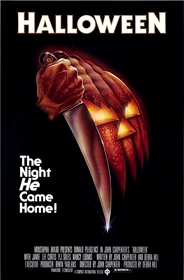
The general purpose of the horror genre is to frighten audiences by producing a series of on-screen images with will play on the audience's mind and disturb them. Some may say that if you are thinking about the film before you go to sleep, and are freaking yourself out, then it has been a good, successful film. This genre is not suitable for everyone however, as many people are not a fan of horror films, and the terror that they can cause to people. Hence why the majority of horror films seem to be rated 15-18 to ensure that they are only viewed by adults who can consciously decide whether the film will be suitable for them before viewing it. Many people do thoroughly enjoy this film genre ,purely for the adrenaline that is sent around the body when genuine terror is felt, even though they may want to stop watching, they find themselves unable to remove their eyes from the screen. A common convention of horror films is for a powerful antagonist to be a murderer of some sort, who goes around usually brutally killing his victims, the antagonist will usually be male, due to the fact that this gender is usually there more dominant sex, who is generally stronger and possesses the ability to enforce pain upon their victims. A male antagonist is conventional and can be found in many horror films such as halloween or friday the 13th. However, this convention has been challenged in films such as 'Jennifer's Body' where the antagonist is female, and preys on young attractive males and brutally kills them. Perhaps a group of antagonists will be used, in the form of zombies (dawn of the dead) or vampires (30 days of night). The purpose of the horror genre is to make audences wonder how they would react if the found themselves in the same situation as the characters on screen, and how terrifying it would be to have to fight against powerful antagonists, or merely fight for survival. Extreme violence, blood and gore is a common convention of the horror genre, and is usually beyond realistic, which brings the audience back to realising that is it just a film. There are different types of horror films. Such as psychological-horror, which plays on the mind of the viewer by emcorporating a throught provoking storyline, as opposed to a film which lacks in story, but has a lot of gore and violence. Some horror films rely on the props such as fake blood and gore to captivate its audience despite perhaps lacking in a storyline with substance. Some horror films encorporate an element of comedy, while still maintaining frightening aspects, the type of comedy in these films however, will be 'black' comedy - the type which you find yourself laughing at, even though you shouldn't. It is argued by many that the horror genre has ultimately stemed from the 'classic' horror films such as 'Frankenstein' and 'Dracula'.